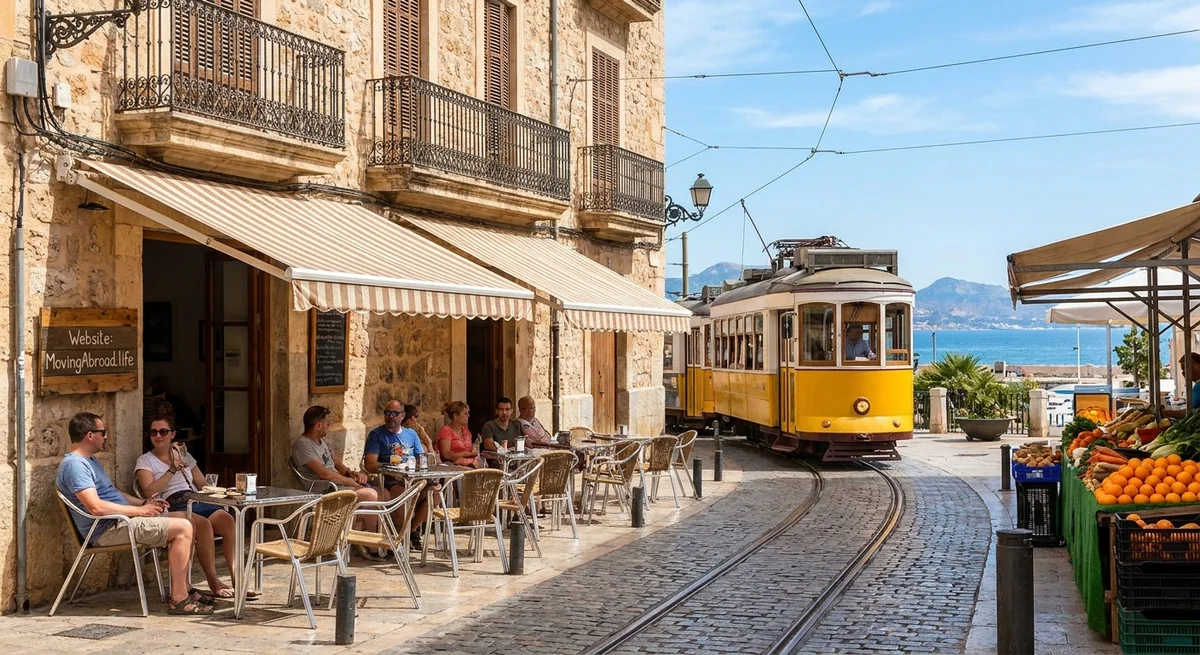
Valencia, Spain: Mediterranean Balance of Affordability and Ease
Valencia: Mediterranean Balance of Affordability and Ease
Introduction: Valencia, Spain’s third-largest city, offers a Mediterranean lifestyle with a mix of urban amenities and beach-town charm. It has emerged as an attractive choice for expats and remote workers seeking a sun-soaked destination that’s more affordable than Madrid or Barcelona. This guide delves into Valencia’s safety, housing and cost of living, visas for remote workers, tax and healthcare details, plus quality-of-life factors like climate, transport, and schooling. We compare Valencia’s pros and cons (including bureaucracy and seasonal tourism) to alternatives like Málaga and Lisbon, using up-to-date data where available.
Safety by Neighborhood
Valencia is generally safe compared to its size, with most crime being non-violent. In national rankings, only Barcelona, Madrid, and Seville had higher crime rates in the first half of 2025 (www.idealista.com). Like any city, safety varies by barrio: touristy areas (e.g. Ciutat Vella/El Carmen) see petty theft. The city has even launched special police patrols in Plaza de la Reina, City Hall Square and the central market area to nip pickpocket rings in the bud (valencianoticias.com). Travelers and residents are routinely advised to guard valuables in crowds (e.g. on metros or busy streets) (www.idealista.com).
On the upside, many districts are quite safe. Travel guides and local analysis note that L’Eixample and Pla del Real—tree-lined, upscale central areas near parks and universities—are among the city’s safest zones (safedistricts.com) (safedistricts.com). The suburban Poblados del Norte also rates safe and family-friendly (safedistricts.com). By contrast, some outer districts (e.g. Rascanya, Olivereta) are labeled “caution” zones due to more petty crime or fewer amenities (safedistricts.com). Overall, Valencia’s authorities report that crime has dropped recently (in early 2025 it fell ~11% year-on-year) (valencianoticias.com).
Housing and Cost of Living
Rental Market
Valencia’s rental market is notably affordable compared to Barcelona/Madrid. Recent market reports show citywide asking rents averaging ~€15.5/m². In real terms this is about €850–900/month for a 1-bedroom, ~€1,200 for a 2-bedroom, and ~€1,550 for a 3-bedroom apartment (www.lavidalencia.com). (These are city averages; central areas can be higher.) By comparison, Barcelona 1BR flats often start around €950–1,500 in the center (spainvistas.com).
Rents vary by neighborhood. The historic core, Ciutat Vella, remains priciest (€19/m²) (www.lavidalencia.com). Quieter family districts like Patraix, Benicalap or La Saïdia are cheaper (€13–15/m²) (www.lavidalencia.com). Providers advise budget renters to consider areas like Benimaclet, Campanar, or Quatre Carreres, which offer 1–2BRs for under €900–1,200 (www.lavidalencia.com). In short: Valencia’s rents are moderate – considerably lower than Barcelona/Madrid, and roughly comparable to Lisbon or Málaga for similar properties.
Monthly Living Expenses
Across the board, day-to-day costs in Valencia tend to be lower than in Spain’s capitals. A recent side-by-side comparison shows Barcelona’s overall cost index well above Valencia’s; Valencia’s monthly cost-of-living (with rent) is about $1,850–1,900 for one person versus ~$2,400 in Barcelona (citycost.org). In Euro terms, a modest single adult budget (rent+basic expenses) might be around €1,500–1,800 per month. Couples or small families might budget €2,500–3,000 monthly to live comfortably; these figures remain below equivalent budgets for Madrid/Barcelona (often requiring €3,000+).
Compared internationally, Valencia is cheaper than Lisbon. One cost tracker estimates Valencia ~9% less expensive than Lisbon overall (livingcost.org): for instance one-person living costs ~€1,650–1,700 (≈$1,797) in Valencia vs ~$1,950 in Lisbon (livingcost.org). Valencia and Málaga are similar; Lisbon and Andalusian cities rank comparably on expense indices. Key expenses (groceries, dining, and transit) are nationally moderate: a café latte is ~€1.50–2, a basic restaurant meal ~€12–15, and grocery prices run slightly under the Spanish average (spainvistas.com) (livingcost.org).
Utilities and transport are affordable. Monthly utilities (electricity, water, internet) for a 75–90m² flat run on the order of €120–€180 (livingcost.org). A monthly public transit pass for city Zone A costs about €40 (spainvistas.com) (covering buses and metro). In Valencia you can also join Valenbisi (city bikes) for ~€30/year (spainvistas.com). Eating out and groceries are on par with or slightly below Lisbon’s costs (livingcost.org) (livingcost.org).
Comparisons: Madrid, Barcelona, Málaga, Lisbon
-
Vs. Madrid/Barcelona: Valencia is significantly cheaper. Rent is about 30-40% lower; food and services roughly 15-20% cheaper (spainvistas.com) (citycost.org). A published analysis puts Barcelona ~23% more expensive than Valencia on average (citycost.org). Incomes (and salaries) are also lower here, but the general consensus is better “bang for the buck”.
-
Vs. Málaga: Málaga is an Andalusian coastal city often cited by expats too. Cost-of-living sites show Málaga’s average costs roughly on par or slightly lower than Valencia’s. For example, one source lists one-person cost ~$1,765 in Málaga vs ~$1,857 in Valencia (livingcost.org) – essentially comparable. Málaga has slightly warmer winters and more tourists, Valencia has more industry/jobs, but overall budgets for rent and food are similar.
-
Vs. Lisbon: Lisbon is slightly more expensive. For a solo person, Lisbon’s monthly cost (with rent) is ~$1,950 vs ~$1,800 in Valencia (livingcost.org). Quality of life indices rate Valencia slightly higher, thanks to more sunshine and lower crime. Groceries and dining are roughly similar, though housing is more expensive in Lisbon. Tax systems differ (Spain’s is progressive at the regional level vs Portugal’s flat rates), but in everyday living Valencia edges out Lisbon on affordability.
Visas and Tax Regimes
Digital Nomad and Non-Lucrative Visas
Spain offers visa paths tailored to foreigners:
-
Digital Nomad Visa (Startup Act): Since 2023 Spain grants remote workers a residence permit. Non-EU/EEA remote employees or freelancers can live and work legally up to 5 years under this visa (www.idealista.com). Requirements include a steady income from abroad (approx €2,760/month for a single applicant in 2025) (www.idealista.com), and limiting Spanish-sourced work to ≤20% of earnings (www.idealista.com). The visa term is initially 1-3 years (renewable up to 5 total) (www.idealista.com). Family members of the nominee can also join. Fees and processing are modest (~€80–90, 1–2 months).
-
Non-Lucrative Residence Visa: This is for people who can support themselves without Spanish employment (e.g. retirees, investors, remote freelancers paid from abroad). It requires proving “sufficient means” – Spanish law mandates having at least 400% of the IPREM (the public income index) per month (roughly €2,400 monthly in 2025) for the main applicant (ciudadaniaexterior.inclusion.gob.es), plus 100% IPREM per dependent. In practice that’s roughly €30,000–35,000 per year (fewer for students or small families). The visa grants up to 1 year initially (extendable to 5-year residency) (ciudadaniaexterior.inclusion.gob.es). Applicants must also have private health insurance (no deductible) and a clean background check. This permit does not allow any Spanish work at all, but holders can renew and eventually apply for full residency.
Impatriate (Beckham) Tax Regime
Spain’s “Beckham Law” is an impatriate tax regime still in force. It lets qualifying newcomers (foreign-hires and now even digital nomads with the above visa (www.kseniailicheva.com)) pay a flat 24% tax on job income (up to €600,000) rather than the normal progressive IRPF (www.kseniailicheva.com). Foreign-source income (capital gains, rents abroad) is largely exempt. The regime must be elected via form (Modelo 149) within 6 months of arrival, and applies for 6 years (the arrival year plus 5 more) (www.kseniailicheva.com). It can dramatically cut taxes for mid/high earners from the Spanish 47-54% top rate down to 24% on their first €600k. (Note: if your income is low or you have many deductions, staying on the normal IRPF might be better (www.kseniailicheva.com).)
Tax Rates and Regional Variations
Spain’s personal income tax (IRPF) is progressive and partly set by regions. In the Valencian Community the tax brackets are especially fine-grained with 14 rates. Preference is given to moderate incomes: the lowest combined rate is 18.5% (for income up to ~€12,450) (www.calculadorarenta.com). However the region has one of Spain’s highest top rates: beyond €300,000 the marginal rate reaches 54% (24.5% state + 29.5% regional) (www.calculadorarenta.com). Middle incomes around €20–30k see an overall rate in the mid-20s, which under recent reforms is lower than the national average (www.calculadorarenta.com) (www.calculadorarenta.com). There are also unique Valencian deductions (for gym fees, dental care, etc.) that can lower tax for families under ~€32k (www.calculadorarenta.com).
For comparison, Andalusia (Málaga) tends to have slightly lower top rates (around 50% combine) and different brackets, and Portugal’s top tax rate is ~48%. Always check the latest region-specific tax tables. Other levies like property tax (IBI) or wealth tax also vary: Valencia reintroduced a modest wealth tax on high estates, while Madrid and Catalonia abolished theirs in recent years.
Healthcare
Spain’s public healthcare system (“Seguridad Social”) is excellent and covers almost all residents. EU citizens can use the European Health Insurance Card (EHIC) initially, but all legal residents eventually register with the national health service. If you work in Spain (or have an S1 form as an EU pensioner), you contribute to the system and then receive essentially free doctor/hospital care with very low co-pays.
Non-EU newcomers must provide private health insurance for residency. Plans must be national or global policies with no deductible (“sin copago”). Such visa-grade plans are much cheaper than in some countries: a healthy adult under 45 can find full coverage for €50–70/month (privatehealthinsurancespain.com). Older adults pay more (e.g. €80–150/month). Couples share plans at somewhat higher total rates (about €100–€220 midlife) (privatehealthinsurancespain.com) (privatehealthinsurancespain.com). These figures are for basic coverage; adding dental or chronic care raises premiums. Once processed, expats often switch (or switch back) to public care and use private insurance as a supplement.
Climate and Environment
Valencia enjoys a classic Mediterranean climate. Winters are mild and winters wet; summers are hot, dry and fairly humid. The 1981–2010 normals show average winter highs around 16–17°C and lows around 7–10°C (www.aemet.es). Summertime (July–August) averages are ~30°C for daily maximum (www.aemet.es). Nights stay warm (July lows ~21°C). Humidity is moderate to high (year-round ~65% relative humidity, ~67% in peak summer (www.aemet.es)), so summer heat can feel sticky. Rainfall ~450–500 mm/year falls mostly Oct–Apr (www.aemet.es). Spring and fall are highly pleasant (20–25°C) and a favorite time to live.
Climate change is intensifying heatwaves. Official studies warn that by the end of the century Valencia could see nearly year-round heat-wave conditions under worst-case scenarios. In fact, researchers project Valencia might experience ~300 days of “extreme heat” per year by 2100, far higher than today’s climate (www.europapress.es). For now, occasional heat waves push the thermometer into the high 30s°C (and can set records above 40°C across Spain), so air conditioning is common. However, sea breezes often moderate peak temperatures along the coast.
Air Quality: Generally good. Valencia’s annual average PM2.5 is about 15 µg/m³ (isglobalranking.org), which is below the EU limit (25 µg) but above the stricter 2021 WHO guideline (5 µg). Occasional pollution spikes occur (diesel traffic, Saharan dust events), but overall the city ranks well for clean air. The municipality has introduced a “Low Emission Zone” (ZBE) covering much of the urban core (movilidad.valencia.es), banning older high-emission vehicles from central areas to control smog. By and large, Valencians enjoy lots of sunshine and breezes; high-volume areas like highways and industrial zones see the worst pollution. Pedestrians often rate Valencia’s air as “good,” especially away from rush-hour downtown.
Mobility: Bikes and Public Transit
Valencia is very bike-friendly. The city has invested heavily in cycling infrastructure. Today there are over 223 km of dedicated bike lanes crisscrossing all districts (valenciaplaza.com), plus another ~37 km of “ciclo-calles” (local roads with bike priority). Public bike-sharing (Valenbisi) is extensive: ~2,760 bikes at 276 stations operate 24/7 (valenciaplaza.com). Usage is high – Valenbisi logged over 510,000 registered users and ~4.3 million total trips in 2023 (valenciaplaza.com). For a cyclist, Valencia is flat and compact, and most museums, markets and beaches are reachable by bike. Even more casual riders benefit from gentle riverside Greens (the Turia Park and canals) and beach promenades.
Public transport is robust. Metrovalencia (run by FGV) has 10 lines (6 urban metro, 4 light rail/tram), covering ~161 km with 147 stations (www.fgv.es). In 2024 it carried ~95 million passengers (www.fgv.es), underscoring its importance. The city’s bus network (EMT Valencia) is extensive too – in 2024 buses saw a record 115.6 million trips (www.valencia.es), thanks to expanded routes and new drivers. In all, citizens make over 200 million public-transit rides per year. Ticketing is integrated: a Zone A monthly pass (~covering the central city) is about €40/month (spainvistas.com). (For comparison, Madrid’s unlimited pass is ~€55 and Lisbon’s is ~€45.) Regular buses also accept a rechargeable card system. Taxis, ride-shares, airports and car rentals are available but pricier. Valenbisi memberships (annual ~€30) and ample bike parking (over 21,000 racks citywide (valenciaplaza.com)) make cycling a safe bet. Overall, moving around Valencia (on foot, bike, bus or tram) is easy and inexpensive.
Schools and Community
Families with children will find a variety of schooling options. Public schools (“colegios públicos”) are free, but instruction is in Spanish and Valencian. These schools are generally well-regarded, with strong math and science programs – Valencian literacy and culture is emphasized alongside standard subjects. Expats often opt for private or semi-private alternatives to ease language transition:
- Concertados – state-subsidized private schools (often Catholic) that offer bilingual Spanish-English or Spanish-Valencian programs. Fees are moderate (a few thousand euros annually), and teachers typically have more flexibility to help non-native learners.
- International schools – there are multiple international/English-curriculum schools (e.g. Lady Elizabeth School, Caxton College near Valencia, Cambridge House, etc.). These charge full tuition, often €8,000–15,000 per year (tuition varies by age and school). For instance, one data site lists an international primary school’s yearly tuition at about $10,445 (~€9,500) in Valencia (livingcost.org) (versus ~$16,697 in Lisbon). Many expats consider these to keep continuity with British or IB curricula.
- Language programs – The Valencian government offers language integration programs for newcomers. Some private academies and language schools also offer Spanish immersion classes.
Higher education is served by the University of Valencia and other campuses (e.g. UPV, CEU), with many English programs. Overall, expat families find enough schooling choices, but should budget extra for private or international schooling if English-only education is desired.
Caveats: Red Tape, Crowds, Summer, Etc.
-
Red Tape & Cita Previa: Like all of Spain, many official procedures (residency paperwork, NIE numbers, bank appointments) require a “cita previa” reservation online. These appointment slots can fill quickly, leading to waits of weeks or months for things like residency renewals or health card issuance. Newcomers often advise: book early and pack patience. On the plus side, once a residency card or NIE is in hand, day-to-day life is straightforward.
-
Summer Crowds: Valencia is popular in summer. The city’s beaches (Malvarrosa, Patacona) and the Old Town can get very busy on hot days and weekends. The annual Fallas festival (March) draws huge crowds to El Carmen. Still, Valencia is nowhere near as overrun as Barcelona or Lisbon – even at peak season it feels lively but not overwhelming. Locals spread out with day trips inland or to calmer beaches nearby. In short, be prepared for a summery buzz, especially on coastal promenades and plazas in July/August.
-
Taxes and Cost Variations: As noted, personal taxes in Valencia are controlled by the regional government. Recent tax reforms cut the burden on low/mid earners but leave a steep top rate. If you earn a high salary or run a business, plan accordingly: the Valencian Community’s maximum IRPF rate (54%) is higher than in some neighboring regions (www.calculadorarenta.com). On the other hand, wealth taxes were reintroduced at modest rates (on very large estates) after years of being near zero. Sales tax (IVA) is standard across Spain (10% for most services, 21% for luxury goods), unaffected by region. For comparison, Andalusia’s top IRPF is lower (50%) and shares similar VAT. In Portugal (Lisbon), taxes and fees follow a different national scale (top 48% IRPF, VAT 23%).
Conclusion
Valencia earns its reputation as a balanced expat haven. It blends affordability with quality of life: beaches, arts and good weather without massive crowds or the extreme cost of Spain’s largest cities. Day-to-day expenses (rent, food, transport) are solidly below Barcelona and Madrid levels, yet the city has modern infrastructure (transit, bikes, co-working spaces). It’s also evolving in expat-friendliness: the new digital nomad visa, lively international communities, and digital services (like easy banking apps) all make setting up easier than in the past. That said, remaining cautious about petty crime (especially sugar-coated by tourist gear), moving bureaucratically through Spain’s procedures, and budgeting for education/health are practical necessities.
Ultimately, Valencia offers a sun-drenched Mediterranean lifestyle with an urban twist. Whether you’re a remote worker yearning for wide boulevards and orange groves, a retiree seeking healthy living at a reasonable price, or a family prioritizing safety and schools, Valencia makes a strong case. It’s not without quirks (bureaucracy, taxes, summer buzz), but for many it’s the “sweet spot” between big-city advantages and coastal relaxation (spainvistas.com) (valenciaplaza.com). As always, personal circumstances vary – but the data paints Valencia as a welcoming choice for those chasing sun, sand, and sensible living costs.
Get New Relocation Research & Podcast Episodes
Subscribe to receive new research updates and podcast episodes about moving abroad, best places to live, expat life, remote work destinations, retirement abroad, cost of living, visas, safety, healthcare, and quality of life.