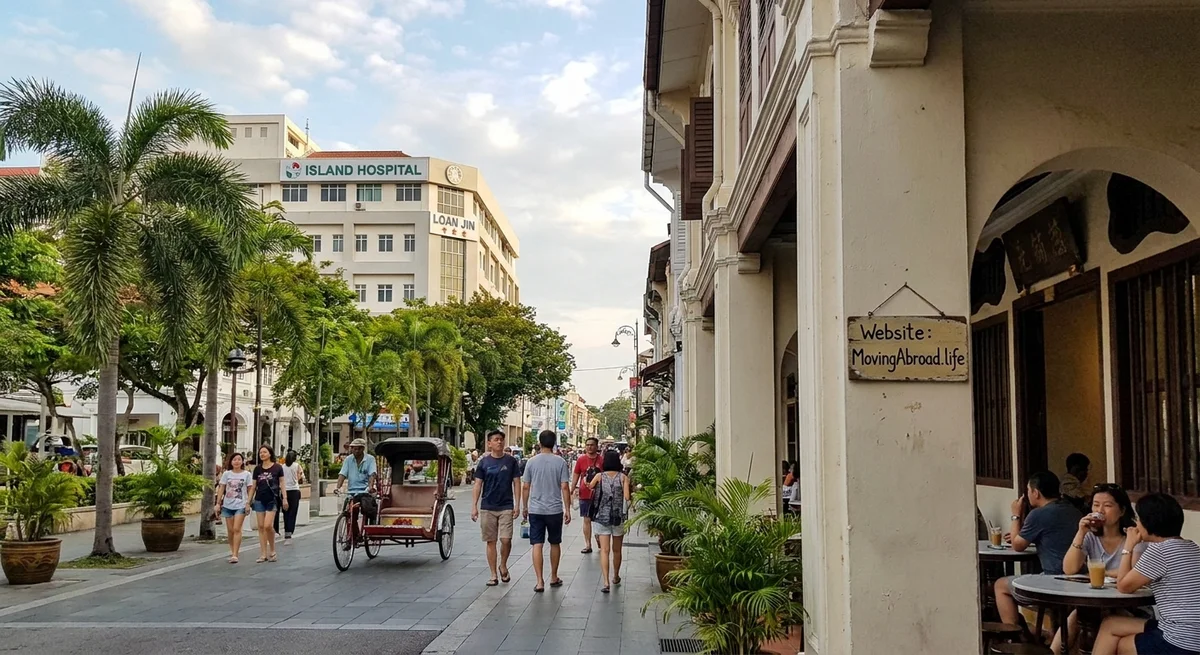
Penang, Malaysia: Slower-Paced Island With Top Hospitals
Penang, Malaysia: Slower-Paced Island With Top Hospitals
Penang is Malaysia’s scenic island state renowned for heritage streets, tropical beaches, and a laid-back lifestyle. For many retirees and expats, it offers a blend of modern amenities with an easygoing pace. In terms of safety, cost, healthcare and lifestyle, Penang often feels more relaxed than Kuala Lumpur but still has big-city comforts. This guide examines Penang’s safety, neighborhood rents (notably Tanjung Tokong, Tanjung Bungah and Georgetown), monthly budgets for retirees and families, the Malaysia My Second Home (MM2H) program, private healthcare quality, tax rules on foreign income, and lifestyle factors like climate, walkability, and travel connections. We also highlight tradeoffs – from job opportunities to traffic and tourism – and benchmark Penang against Chiang Mai (Thailand) and Da Nang (Vietnam). By the end, you’ll have a data-backed portrait of Penang’s real upsides and downsides for expats.
Safety and Neighborhoods
Malaysia consistently ranks among the safest countries in Asia (13th globally in the 2024 Global Peace Index (www.thestar.com.my)), and Penang in particular is noted for low crime. Official sources point out that Penang “consistently ranks as one of Malaysia’s safest states,” with very rare violent crimes and only occasional petty theft (www.newpages.asia). Expats and families report feeling secure even at night in most areas. The only notable safety concern is the busy traffic (see below), but for personal crime Penang is generally very safe.
Penang’s expat-friendly neighborhoods include Georgetown (the island’s downtown and UNESCO heritage core), and the northern coastal suburbs Tanjung Tokong and Tanjung Bungah. Georgetown’s older quarters are walkable and dense with shops and restaurants (and a free city bus), while Tanjung Tokong and Tanjung Bungah have modern waterfront condo towers popular with foreigners. These areas have expat meetups, international schools (in Tanjung), and lots of amenities, though traffic can be heavy.
Housing and Rents
Rental prices vary widely by area. In central Georgetown, you can find modest one-bedroom apartments for around RM 1,300–1,700 (USD 290–380) per month (www.retiresea.com). Even nicer city-center units near Gurney Drive run only RM 1,500–2,000 (~USD 340–450) (www.retiresea.com). By contrast, modern seaside condos in Tanjung Tokong (e.g. Straits Quay, I-Santorini) or Batu Ferringhi command premiums – roughly RM 3,500 (≈USD 795) per month for a 2–3-bedroom apartment (bambooroutes.com). Tanjung Bungah’s beachfront complexes are similarly priced to Tanjung Tokong. In other parts of the island or nearby mainland (Butterworth), rents are lower – about 20–30% cheaper (bambooroutes.com).
Example rents: According to local data, a one-bedroom downtown apartment averages about RM 1,290/month (≈USD 290) (www.retiresea.com). A larger family apartment (2–3 bedrooms) in Tanjung Tokong or Batu Ferringhi might go for RM 3,000–3,800 (~USD 700–870) (bambooroutes.com). Furnished units in these expat areas typically cost 5–12% more than unfurnished ones (bambooroutes.com) (so expect higher rents if you want a ready-to-live condo).
Monthly Budgets for Retirees and Families
Living costs in Penang are generally low by Western standards. Practical guides estimate that a comfortable budget for a single retiree is about USD 1,100–1,700 per month (www.retiresea.com). This would cover a nice 1-bedroom condo, regular dining out, private health insurance, local transport, and social outings. A frugal retiree could get by on roughly $850–$1,000 (www.retiresea.com). A retired couple living well might spend USD 1,700–2,200 per month (www.retiresea.com). (By contrast, a global nomad index currently puts Penang’s overall expat cost around USD 850/month, one of the cheapest in SE Asia (www.retiresea.com).)
For families, costs rise with housing, schooling, and extra needs. One expat budget analysis finds that two adults plus two children might require around RM 8,000–12,000 per month (about USD 1,800–2,700) to cover a 3-bedroom condo, food, local transport and incidentals (rumavi.com). International school fees (about RM 1,500–5,000 or USD 340–1,130 per child per month (rumavi.com)) are a big variable. In practice, many families budget similarly to Kuala Lumpur: perhaps RM 2,000–3,500 per month for housing (3BR in Tanjung or Gurney) and a few hundred for utilities (rumavi.com), plus groceries and insurance.
By comparison, in neighboring countries the numbers are mixed. Chiang Mai’s cost is only slightly lower than Penang: one analysis shows a comfortable Chiang Mai budget around USD 1,300–1,800/month (www.retiresea.com), versus USD 1,200–1,700 for Penang. Da Nang is cheaper – a “comfortable” single expat budget is roughly USD 1,200–1,500 (www.vietnamrelocate.com). A Da Nang family with two kids in international school might spend around $5,500–$7,500/month (www.vietnamrelocate.com) (similar to Penang’s higher end if schooling costs are included). In short, Penang is generally in the same cost ballpark as Chiang Mai and above Da Nang, but with top-tier amenities and services.
Malaysia My Second Home (MM2H) Visa
Retirees often ask about Malaysia’s long-stay visa (MM2H). The program has been relaunched recently with tiered options. In 2026 the “Silver” level gives a renewable 5-year visa in exchange for a USD 150,000 (≈RM 600,000) fixed deposit in a Malaysian bank and a minimum property purchase of RM 600,000 (www.iproperty.com.my). Gold (15-year visa) and Platinum (20-year visa) tiers require higher sums (USD 500,000 and USD 1,000,000 fixed deposits, respectively) and larger property investments (www.iproperty.com.my). There are also participation fees (e.g. RM 1,000 for Silver, RM 3,000 for Gold) and renewal fees (www.iproperty.com.my). After the first year, MM2H holders may withdraw up to half of the deposit for approved needs (home purchase, medical bills, children’s education, local travel) (www.iproperty.com.my). In short, MM2H is a viable option, but it does require significant funds and paperwork.
Top-Notch Private Healthcare
One of Penang’s biggest draws is high-quality, affordable medical care. The island has several internationally accredited hospitals. For example, Penang Adventist Hospital (over 600 beds) holds Joint Commission International (JCI) accreditation (pah.com.my), and Island Hospital is accredited by the Malaysian Standards in Healthcare and by the Australian Council on Healthcare Standards (ACHS) (islandhospital.com). These hospitals have Centers of Excellence in cardiology, oncology, etc, and many English-speaking, Western-trained doctors. In fact, an expat guide notes Penang offers “world-class” medical care at far lower costs than Western countries (rumavi.com).
Healthcare is so affordable here that many expats even choose to pay out-of-pocket rather than buy expensive insurance (rumavi.com). Consultation fees are very low – around RM 50–120 (US$12–30) for a doctor’s visit (rumavi.com). A survey of top Malaysian hospitals found specialist visit fees of only about $17–$33 USD (www.retiresea.com), compared to $43–$87 in Thailand. Prescription drugs and dental care are similarly cheaper. All told, Penang’s healthcare rivals any in Asia (rivaling Bangkok or Singapore hospitals) but at a fraction of the cost, making it a major plus for retirees and families (rumavi.com) (www.retiresea.com).
Tax on Foreign Income
Malaysia uses a territorial tax system: only income sourced within Malaysia is taxed (taxexodus.com). In practice this means foreign pensions, investment income or remittances are not subject to Malaysian income tax, as long as they originate overseas. Importantly, the government has extended this exemption through 2036 (www.linkedin.com), so expats can (for now) bring in overseas earnings without Malaysian tax. (Any income earned in Malaysia – e.g. from local consulting – would still be taxable.) This makes Penang especially attractive compared to many countries where worldwide income is taxed.
Climate
Penang is tropical: hot and humid year-round. Average daily high temperatures hover around 30–32 °C, with little seasonal variation (www.worlddata.info). Even at night the mercury rarely dips below the mid-20s. The island receives abundant rain – roughly 20 days of rain in the wettest months (October–November) (www.worlddata.info). In other words, there’s no “cool season” escape. Many sources note the relentless heat and humidity can be challenging, especially midday (bambooroutes.com). By contrast, Chiang Mai has a distinct cool/dry winter (nighttime lows ~15–20 °C) and a hot dry season, and Da Nang has a cooler winter and a pronounced monsoon (heavy rain in autumn). In Penang, even “dry” months (Jan–Mar) still feel tropical. Most expats keep air conditioning at home and plan outdoor activities for early morning or late evening.
Walkability and Transportation
Georgetown (the UNESCO heritage core) is relatively walkable. Its grid of narrow streets is compact, and a free “CAT” bus circulates the city center every 15 minutes (rumavi.com), making it easy to get around without a car. Many restaurants, cafes and shops are right on the sidewalks. However, outside this historic core Penang becomes much less pedestrian-friendly. Tanjung Tokong and Tanjung Bungah are spread-out suburbs, and the main beach strip (Batu Ferringhi) is a long highway where sidewalks are limited. As one travel guide puts it, Penang offers a “walkable heritage city… [OR] a seafront expat strip” – but not both together (bambooroutes.com).
Public transport (Rapid Penang buses) serves major routes across the island and to Butterworth on the mainland. Monthly bus passes cost about RM 100 (rumavi.com), and single rides are only RM1.40–4.00. There’s even a free intra-city bus loop in Georgetown. In practice, many expats use ride-hailing (Grab) or drive. Penang is more car-dependent than, say, Singapore or Hong Kong. Owning a car means dealing with occasional traffic jams – a notorious bottleneck is the north–south commute. For example, travel blogs warn that going from the airport area (Bayan Lepas) to George Town can exceed an hour during rush hour (bambooroutes.com). If you plan to explore beyond your neighborhood or visit the mainland frequently, having a vehicle or motorbike makes life easier.
Connectivity to Kuala Lumpur and Singapore
Penang’s travel links are strong. Sultan Abdul Halim Airport (PEN) has multiple daily flights to Kuala Lumpur, and the flight time is only about 1 hour (www.rome2rio.com). Driving to KL via the North–South Highway is roughly 350 km, which takes about 3.5–4 hours (www.rome2rio.com). Train service (KTM ETS) also runs from Butterworth (just off the island) to KL in under 5 hours (plus a short ferry). Singapore is about 725 km south – roughly an 8½ hour drive as of 2026 (www.airmilescalculator.com) – so most people prefer the ~2-hour flight. In summary, Penang is well-connected regionally: you can reach KL in a morning, and even Singapore is a quick hop by air. This makes it easy to visit other international hubs or fly home.
Tradeoffs and Drawbacks
Every location has downsides, and Penang is no exception. One major tradeoff is the limited job market. Penang’s economy is dominated by manufacturing and tech (semiconductors, electronics) (bambooroutes.com), which means expat job openings are mostly in specialized engineering or management roles within those industries. BambooRoutes notes that the jobs most open to non-Malaysians are things like senior engineering, operations management or supply-chain specialist positions in high-tech firms (bambooroutes.com). In short, if you are not relocating with a company or having a skilled tech offer, finding work in Penang can be harder than in a bigger city. This is unlike Chiang Mai or Da Nang, where tourism, English teaching or small businesses may offer more English-friendly opportunities.
Relatedly, Penang is not a walk-in restaurant job market – locals fill most service roles. Expect to rely on a work visa (Employment Pass) or independent income. This narrower job landscape is the price of Penang’s quieter lifestyle.
Another issue is traffic and car-dependence. As mentioned, the island’s two-lane roads can bottleneck, and public transport outside the core can be slow or infrequent. Most households own at least one car or scooter. Area pollution and congestion (especially between George Town and the airport area) are often cited by residents (bambooroutes.com). On hot days, traffic jams can make commutes unpleasant. In contrast, Chiang Mai is larger geographically but also suffers serious traffic (many use bikes), and Da Nang’s roads are improving but still prone to rush-hour backup.
Finally, tourism congestion can be a factor. George Town’s heritage zones are always busy with visitors. Streets like Love Lane or Armenian Street can be very crowded on evenings and weekends, which some expatriates find a nuisance. Similarly, the Batu Ferringhi beach area sees heavy crowding during school holidays. Compared to Chiang Mai’s Old City (packed with tourists) or Danang’s Han River waterfront, Penang’s hotspots are quite active.
Penang vs. Chiang Mai and Da Nang
To put Penang in perspective:
-
Chiang Mai, Thailand: Chiang Mai has a large expat/retiree community and often vies with Penang. It is slightly cooler in winter and heavy on tourist-oriented services. A seat-of-the-pants cost comparison shows any savings are small: Chiang Mai overall is only a few percent cheaper than Penang (www.retiresea.com). On essentials, Penang actually undercuts Chiang Mai in some areas – for example, electricity and transportation costs are much lower in Malaysia (www.retiresea.com). Healthcare in Chiang Mai benefits from multiple JCI-accredited hospitals (Bangkok Hospital Chiang Mai, etc.), but private care is more expensive per visit (www.retiresea.com). Visas are a big difference: Malaysia’s veteran MM2H provides renewable multi-year stays (eg. 5-year Silver tier) (www.retiresea.com), whereas Thailand’s retirement visa (Non-OA) requires annual renewal and a THB 800,000 bank balance, plus extra reporting (www.retiresea.com). English is widely spoken in Penang (education/business are conducted in English) (www.retiresea.com), often more so than in Chiang Mai. In summary, Chiang Mai may feel more “East Asian” and lively, but Penang usually offers heavier subsidies (and heavier expat amenities) in exchange for a somewhat quieter environment. (www.retiresea.com) (www.retiresea.com)
-
Da Nang, Vietnam: Da Nang is a green coastal city that is much cheaper than Penang. A modest expat budget in Da Nang might be only USD 1,200–1,500/month (www.vietnamrelocate.com), and local rents are very low. A family with kids at international schools would still spend $5,500–$7,500 (www.vietnamrelocate.com), reflecting schooling costs (roughly $1,200–1,500 per child (www.vietnamrelocate.com)). Penang, by contrast, had an estimated RM8,000–12,000 family budget (rumavi.com), so living costs are higher. On the plus side, Penang’s infrastructure (roads, clinics, international airport) is more mature. English is more common in Malaysia; in Da Nang most signage and government business is in Vietnamese. Healthcare in Da Nang is developing – emergency care is available but for major procedures many still go to Ho Chi Minh City or abroad. Vietnam also lacks a retiree visa (expats typically juggle business visas). Finally, Da Nang’s climate has a pronounced monsoon and occasional typhoons, whereas Penang’s weather is just steadily tropical. Many people choose Da Nang for wallet-friendly living, but Penang offers greater stability, service quality, and expatriate support in return for a higher cost.
Conclusion
In short, Penang offers a safe, English-friendly environment with world-class healthcare and relatively low costs, set against a gentle tropical backdrop. It is slower and smaller than Kuala Lumpur, yet still far more cosmopolitan and well-equipped than many Asian smaller cities. For retirees and families, the math often works: moderate budgets yield very comfortable living. The Malaysia My Second Home visa provides a clear pathway to a multi-year stay. On the flip side, Penang’s job market isn’t large for outsiders, and daily life can involve driving and dealing with traffic/congestion. Compared to Chiang Mai or Da Nang, Penang’s appeal is in its full-service lifestyle (especially medical care and visa ease), whereas those others may offer cheaper day-to-day living or distinct climates.
Any prospective expat should weigh these factors. Fortunately, statewide data-backed sources confirm Penang’s strengths (safety, affordability, healthcare) and honestly highlight the quirks (heat, traffic, tourist crowds). Ultimately, for many Western expats – particularly retirees and remote workers – Penang ticks almost every box. It is a slower-paced island with top hospitals that just might be the right fit for your next move.
Get New Relocation Research & Podcast Episodes
Subscribe to receive new research updates and podcast episodes about moving abroad, best places to live, expat life, remote work destinations, retirement abroad, cost of living, visas, safety, healthcare, and quality of life.